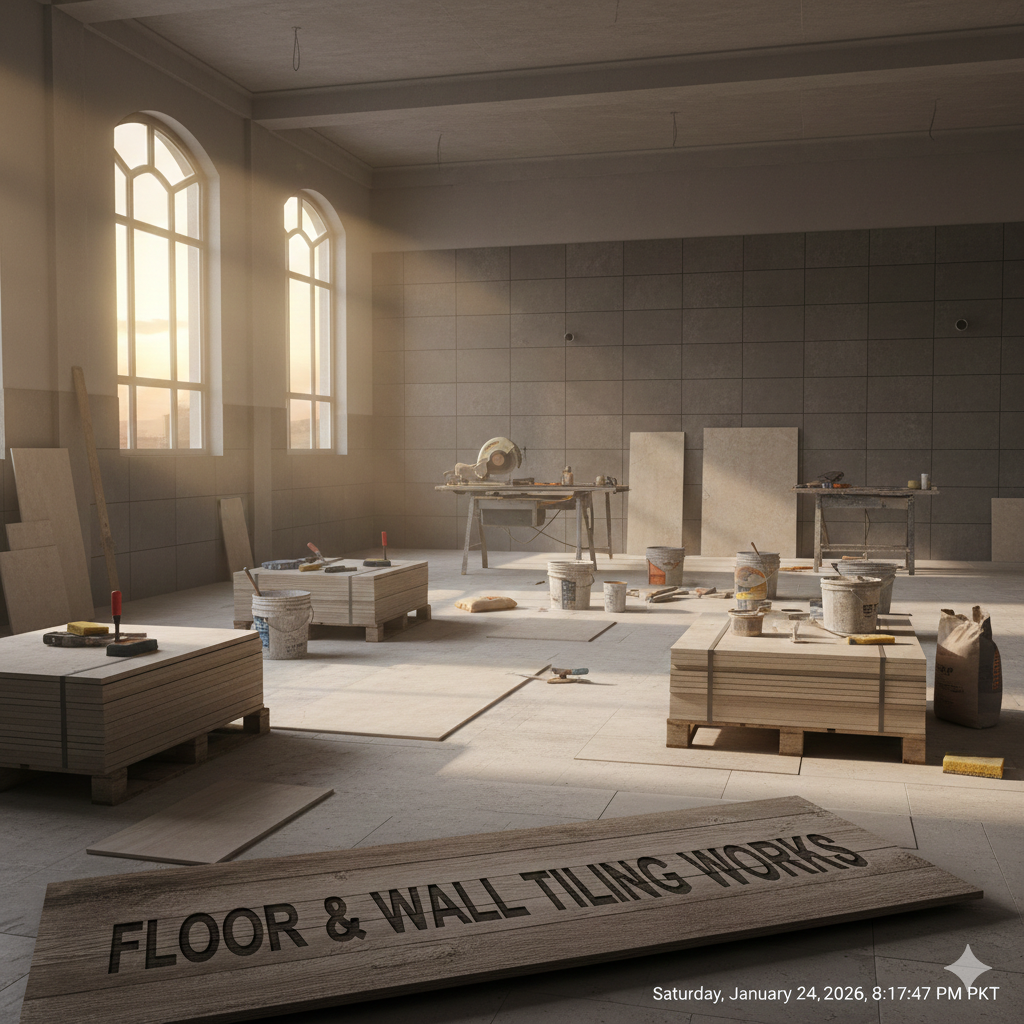
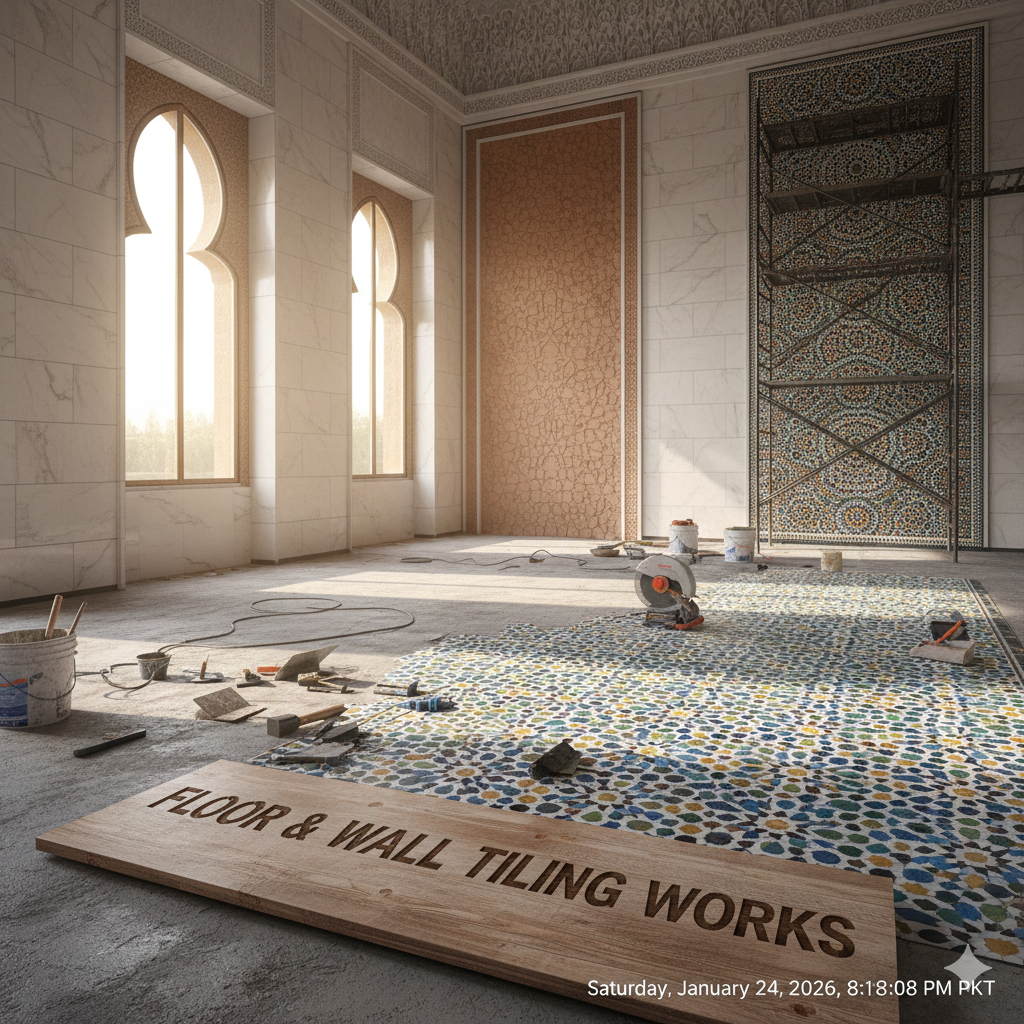
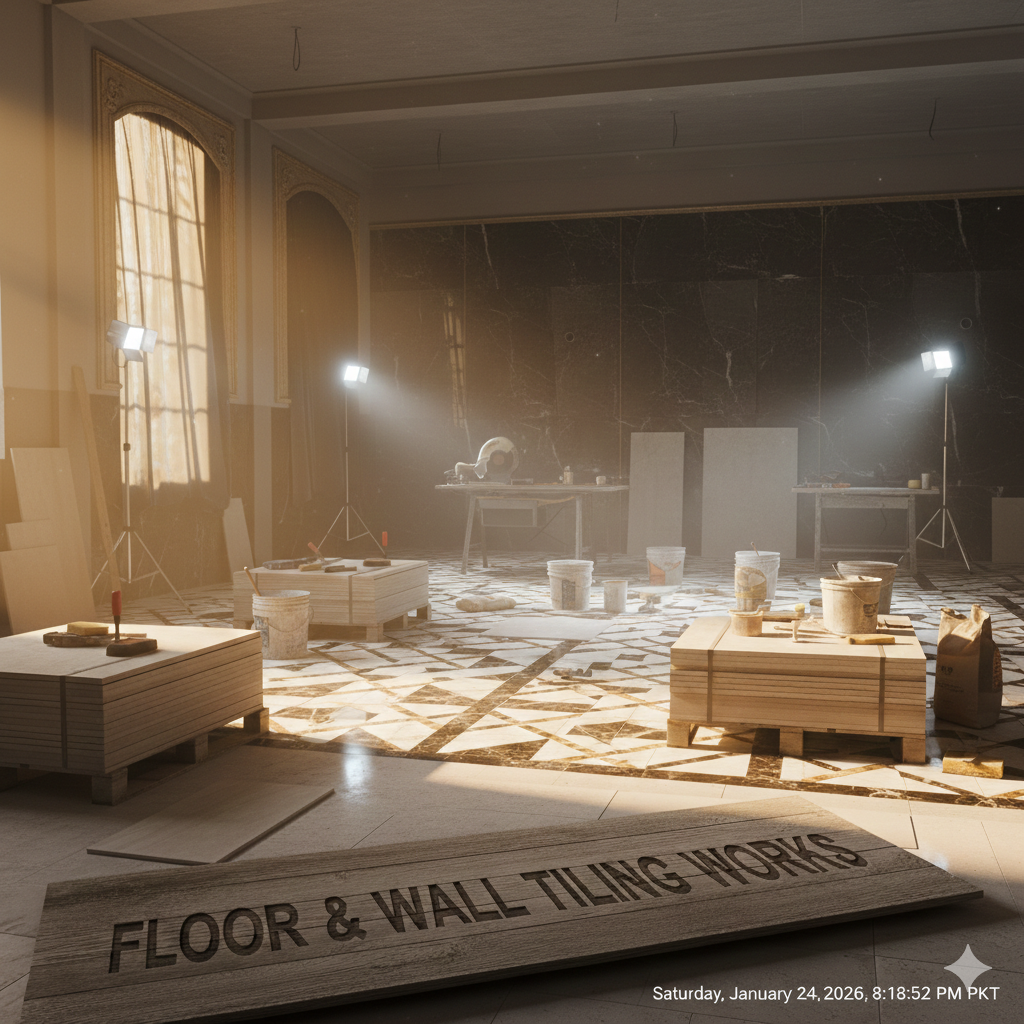
The installation of flooring and wall tiles is governed by technical standards focusing on slip resistance,
waterproofing, and structural bonding. Legally, contractors must ensure that materials used in "wet areas"
like bathrooms and kitchens comply with anti-slip ratings and strict waterproofing protocols to prevent
structural water damage. The substrate preparation must meet specific leveling tolerances to ensure the
longevity of the installation and prevent cracking under heavy foot traffic.
Precision tiling requires the use of approved adhesives and grouting materials that accommodate thermal
expansion, particularly in large open areas. Professional standards dictate that marble and natural stone must
be sealed correctly to prevent staining. Liability in these works covers the accurate alignment of joints and
the prevention of "hollowness" behind tiles, which can lead to breakage. Furthermore, all installations must
align with accessibility codes, ensuring transition strips and floor levels do not create trip hazards or
barriers.
تخضع أعمال تبليط الأرضيات والجدران لمعايير فنية تركز على مقاومة الانزلاق، وعزل المياه، والترابط الإنشائي.
قانونياً يجب على المقاولين التأكد من أن المواد المستخدمة في "المناطق الرطبة" كالحمامات والمطابخ تتوافق مع
تصنيفات مقاومة الانزلاق وبروتوكولات العزل الصارمة لمنع الأضرار الإنشائية الناتجة عن تسرب المياه. كما يجب أن
يراعي تجهيز الأسطح مستويات استواء دقيقة لضمان ديمومة التركيب ومنع التصدع تحت ضغط الحركة الثقيلة.
يتطلب التبليط الدقيق استخدام مواد لاصقة وترويبات معتمدة تراعي التمدد الحراري، خاصة في المساحات الواسعة. وتقضي
المعايير المهنية بضرورة معالجة الرخام والأحجار الطبيعية بمواد عازلة لمنع التبقع. تشمل المسؤولية المهنية دقة
محاذاة الفواصل ومنع وجود فراغات خلف البلاط، مما قد يؤدي إلى الكسر. علاوة على ذلك، يجب أن تتماشى جميع التركيبات
مع أكواد الوصول، لضمان أن الفواصل ومستويات الأرضيات لا تشكل مخاطر تعثر أو عوائق حركية