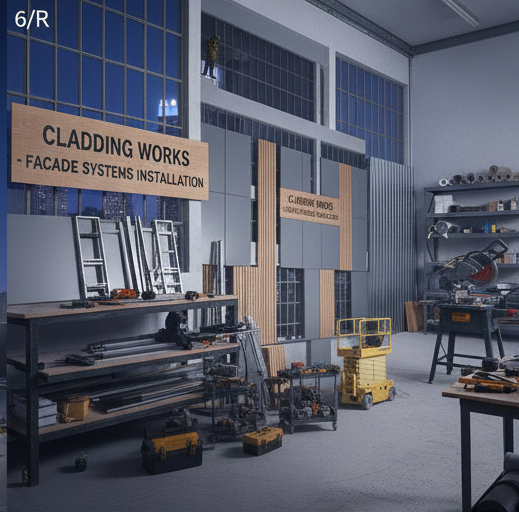
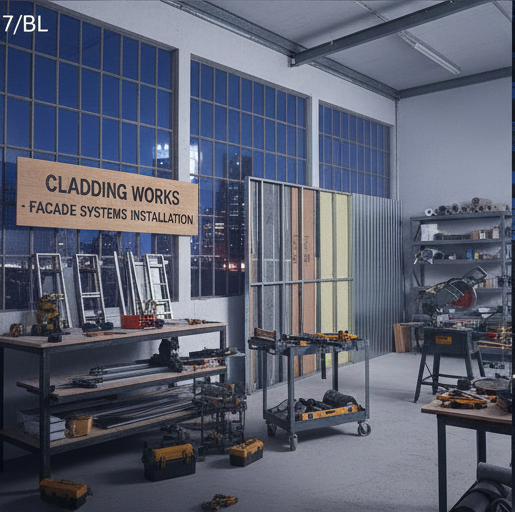
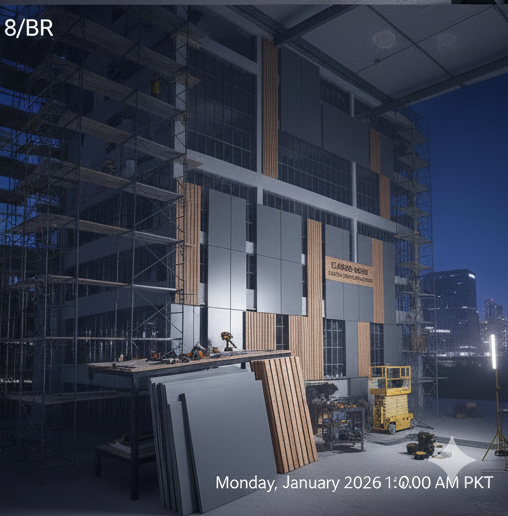
Cladding works involve the installation of external and internal layers that serve both protective and
aesthetic functions. Legally and technically, the most critical aspect of cladding is adherence to fire safety
regulations, particularly for Aluminum Composite Panels (ACP). Materials must be certified as non-combustible
or fire-retardant to prevent rapid flame spread. The installation must also feature robust mechanical fixing
systems designed to withstand wind loads and thermal expansion, ensuring the panels remain securely attached
to the building's skeletal structure.
Furthermore, cladding acts as a primary barrier for thermal insulation and moisture protection. Contractors
are responsible for ensuring proper weather sealing and ventilation gaps (rainscreen principles) to prevent
water ingress and improve energy efficiency. Professional standards require that joints are perfectly aligned
and that the materials used are resistant to UV radiation and environmental corrosion. Compliance with these
technical specifications ensures the building's longevity and minimizes long-term maintenance liabilities.
تتضمن أعمال التكسية تركيب طبقات خارجية وداخلية تؤدي وظائف وقائية وجمالية في آن واحد. من الناحية القانونية
والفنية، يعد الجانب الأكثر أهمية هو الالتزام بـ لوائح السلامة من الحرائق، لا سيما لألواح الألمنيوم (ACP)، حيث
يجب أن تكون المواد معتمدة كغير قابلة للاحتراق أو مقاومة للحريق لمنع انتشار اللهب. كما يجب أن يعتمد التركيب على
أنظمة تثبيت ميكانيكية قوية مصممة لمقاومة أحمال الرياح والتمدد الحراري، مما يضمن بقاء الألواح مثبتة بإحكام في
هيكل المبنى.
علاوة على ذلك، تعمل التكسية كحاجز أساسي لـ العزل الحراري والحماية من الرطوبة. يتحمل المقاولون مسؤولية ضمان
الختم المحكم ضد العوامل الجوية وتوفير فجوات التهوية لمنع تسرب المياه وتحسين كفاءة الطاقة. تتطلب المعايير
المهنية محاذاة الفواصل بدقة، وأن تكون المواد المستخدمة مقاومة للأشعة فوق البنفسجية والتآكل البيئي. إن الالتزام
بهذه المواصفات الفنية يضمن ديمومة المبنى ويقلل من التزامات الصيانة على المدى الطويل.